
10 ways Collaborative Practice training will make you better at what you already do

10 ways Collaborative Practice training
will make you better at what you already do

Here is a slightly odd sales pitch for my Collaborative Practice training.

You don’t actually need to practise Collaboratively to get your money’s worth.

Now, obviously, I hope you do. I have spent a large part of my career trying to get more professionals working in this way, so it would be a fairly terrible business model if I started talking you all out of it. 😂

But one of the things I love most about teaching Collaborative Practice is watching people realise that the skills they are learning are not just “Collaborative skills”.

They are human skills.

At its heart, Collaborative Practice teaches us to slow down and get curious about the human sitting in front of us. We learn to listen for more than just the answer to our question and to dig a little deeper into what someone really wants, rather than simply accepting what they tell us they want.

That curiosity changes the conversation. We start to understand what might be driving a person’s position and we get better at asking the question that helps both of us see the problem differently. And when things get difficult, as they inevitably do when humans and conflict collide, we have more tools to help people move through the mess and make good decisions, even when they are stressed, scared, angry or sometimes all three before morning tea.

Those skills are useful everywhere.

So whether you are a lawyer, mediator, financial professional, coach or another professional working with separating families, here are 10 things you might accidentally get better at if you learn Collaborative Practice.

1. Become a better litigator. Yes, really.

This one sometimes surprises people.

Collaborative Practice and litigation tend to get talked about as though they live at opposite ends of the family law universe. Learn Collaborative Practice and apparently you must immediately throw away your court shoes and refuse to utter the words “interim hearing” ever again.

Except that isn’t how it works.

Good litigation requires us to be really clear about two things: what our client wants and what the law can actually deliver. And, as every family lawyer knows, those two things do not always line up neatly.

This is where Collaborative skills can be incredibly useful. They teach us to slow down and get underneath what our client is telling us they want. Why does that particular outcome matter so much? What are they worried about? What are they trying to protect? Sometimes the answer gives us a completely different way of looking at the problem. And sometimes it helps us have the much harder conversation about the gap between the outcome our client desperately wants and the outcome the law can realistically give them.

But it doesn’t stop with our own client.

We can bring that same curiosity to the person on the other side of the problem. Instead of only responding to the position they have taken, we can start wondering what is driving it. We might not agree with them, and we certainly don’t need to, but if we can understand what matters to them, we have more information to work with.

And that matters enormously in litigation. Because even when a case is in court, most of the work is still about trying to solve problems and find the things that can be agreed. Understand the drivers and sometimes you can settle one issue, then another, and perhaps even the whole case.

Collaborative Practice doesn’t make you less of a litigator. It simply adds a few more tools to the toolbox.

And I will take all the tools I can get.

2. Get better at settling cases

Understanding what is driving the people involved is one thing. Knowing what to do with that information is where things get really interesting.

One of the habits we learn in Collaborative Practice is to resist racing straight from “here is the problem” to “here is my solution”. Which is harder than it sounds, particularly for lawyers. We are trained to solve problems and most of us quite enjoy being the person with the answer!

Instead, we spend more time getting clear on what actually needs to be solved before we start throwing solutions around and that changes negotiations.

If we are only negotiating from positions, there isn’t always much room to move. One person wants A. The other wants B. We can argue about A and B for a very long time, and family law has certainly demonstrated an impressive capacity to do exactly that.

But once we understand why A matters and why B matters, we have more to work with. We can start generating options that neither person may have thought of at the beginning, test those options against what actually matters to them and sometimes find a solution hiding somewhere other than A or B.

That doesn’t mean everyone gets what they want. It doesn’t mean splitting everything down the middle or agreeing for the sake of keeping the peace. And it certainly doesn’t mean avoiding the difficult legal realities that sometimes need to be said out loud.

It just means we get better at solving the right problem.

And when your day job involves helping humans who disagree with each other find a way forward, that is a pretty useful skill to have

3. Ask better questions, rather than just more of them

Lawyers, in particular, are very good at questions. We have MANY questions. We can ask questions for hours and, if necessary, provide you with a questionnaire containing questions about the questions we are planning to ask you later.

But Collaborative Practice teaches us a slightly different skill. It teaches us to stay curious for longer.

That sounds simple, but I don’t think it always is. As professionals, we are used to being the person who knows what to do next. Someone tells us their problem and, while they are still talking, our brain is already busily sorting the information, spotting the issues and racing ahead to the advice or the solution.

Collaborative Practice asks us to resist that urge for just a little longer. Instead of assuming we understand what someone means, we get curious about it. We ask them to tell us more. We wonder why something matters so much to them, or what they are most worried might happen. And often it is that next question, the one we might not have asked because we thought we already knew the answer, that tells us what is really going on.

That changes the quality of the conversation. Because better questions give us better information, but they also help the person sitting in front of us think differently about their own problem. Sometimes they don’t know why something matters so much until we give them the space to work it out.

And this one definitely isn’t just for lawyers. If your work involves humans and their problems, getting better at being curious before jumping in with the answer is a pretty handy skill.

Even for those of us who really, really like having the answer.

4. Build some very human superpowers in an AI world

I think about this one a lot at the moment.

AI can already do an extraordinary amount of the technical “doing” in professional work, and it is only going to get better at it. Work that once took us hours can now happen in minutes, sometimes seconds, and I don’t think we are anywhere close to seeing the end of that change.

Which leaves us with a pretty interesting question. If technology can increasingly do the doing, where does our real value sit?

I think more and more of it sits in being really good at humans.

It is in sitting across from someone and listening properly, not just waiting for the bit of information you need to give your advice. It is noticing when what someone is saying and what they actually mean might be two different things. It is being curious enough to ask one more question, reading the room when a conversation starts to shift, and understanding why two perfectly sensible humans can look at exactly the same problem and see two completely different things.

And in family law in particular, it is being able to help someone work out what actually matters to them when their brain is full of fear, anger, uncertainty and 47 different pieces of advice from friends, family and possibly someone they met at school pick-up.

For years we have called these the “soft skills”, as though they were the nice extra bits sitting around the edges of the real professional work.

I think that has it completely backwards.

As AI gets better at the technical work, our ability to listen, connect, communicate, be curious and help humans make difficult decisions is going to become more valuable, not less.

These are our very human superpowers.

And they just happen to sit right at the heart of Collaborative Practice.

5. Become a better negotiator without becoming a bigger pain in the bum

Somewhere along the way, we seem to have confused being a good negotiator with being the person who pushes hardest.

And sometimes we do need to push. Sometimes we need to be firm, give difficult advice or hold a line. Collaborative Practice doesn’t ask us to hand over our backbone at the door. But sometimes pushing harder just means everyone pushes back harder and we all spend another six weeks writing increasingly grumpy emails to each other.

Collaborative Practice gives us another set of tools.  Instead of focusing only on what each person says they want, we get curious about why they want it. Once we understand what actually matters, where the worries sit and what each person is trying to protect, we suddenly have far more information to negotiate with. And that can open up options that weren’t obvious when everyone was busy defending their original position.

It doesn’t mean becoming a pushover.  For me, that is the real skill in negotiation. It isn’t about being “nice”, avoiding disagreement or finding the halfway point between two competing demands. It is about knowing when to push, when to pause, when to ask another question and when there might be a completely different way through the problem.

You can still be strategic and strong. (You just don’t necessarily have to be a pain in the bum while you are doing it. 😂)

6. Understand what happens when humans get stressed and slightly weird

Family law is, among many other things, an industry built around humans having some of the hardest conversations of their lives. And humans under stress can get a little weird.

When everything feels uncertain, we don’t always behave like the calm, rational humans we might ordinarily be. We can get stuck on one thing and find it almost impossible to move past it. Something that seems completely insignificant to everyone else can suddenly become VERY important. And sometimes we send an email at 11.47pm that could have waited until morning… or maybe should never have been sent at all.

One of the things Collaborative Practice teaches us is to become more curious about what might be happening underneath the behaviour we can see. Someone who appears to be stubbornly refusing to move might actually be frightened about what happens next. Someone who is completely fixated on one small issue might be desperately trying to regain a little control when everything else in their life feels uncertain.

That doesn’t mean we excuse poor behaviour or decide that every unreasonable position is suddenly reasonable but understanding what might be driving the behaviour gives us more choices about how we respond to it.

Instead of simply deciding that someone is “difficult”, we can ask ourselves ‘what might be making this difficult for them’. That is a very different question, and sometimes it leads us to a very different response.

It turns out that understanding why humans get slightly weird under stress is quite useful when your work involves humans under stress. Who knew? 😂

7. Learn to treat a family law settlement like a project

This is one of the things I think Collaborative Practice teaches particularly well, although we don’t always describe it this way.

A family law settlement is really a project.

There is a beginning, an outcome we are working towards and usually a whole lot of things that need to happen in between. We need information, advice and sometimes input from different professionals. Decisions need to be made in a sensible order and everyone needs to understand what is happening next.

And yet family law can become incredibly reactive. We can spend so much time dealing with whatever has landed in front of us that day that we lose sight of the bigger plan. The matter keeps moving, everyone is very busy, lots of emails are being sent, and then mediation suddenly appears in the calendar and we discover there were 14 things we really should have sorted out before we got there.

Collaborative Practice teaches us to step out of that reactive rhythm and deliberately design the process. We get clear about what needs to be resolved, work out what information and expertise will help us get there, decide who is doing what and keep everyone moving through the work in a logical order.

That doesn’t mean everything goes neatly to plan. Humans are involved, so obviously that would be asking a bit much. 😂 But it does mean someone is managing the process rather than simply responding to whatever happens next.

And I think that is a hugely transferable skill.

Whether you are working Collaboratively, negotiating a settlement, preparing for mediation or managing a matter that is already in court, treating the resolution process as a project can make the whole thing more purposeful, more efficient and a lot less chaotic.

8. If you aren't a lawyer, get a peek inside our strange little lawyer brains

I think this is a really important part of Collaborative training that can sometimes get lost.

This training is not just for lawyers.

Collaborative Practice works because different professionals bring different expertise to the table. That might include financial professionals, coaches, psychologists, mediators and others who work with separating families.

And for those professionals, the training provides a slightly fascinating peek behind the lawyer curtain.

You get to understand why we think the way we do, why the legal system works the way it does, why lawyers sometimes become focused on things that seem completely bizarre to everyone else in the room, and the professional obligations and constraints that sit behind some of our decisions.

We lawyers also get the equally useful experience of discovering that ours is not, in fact, the only brain worth having in the room. 😂

When we understand each other’s professional worlds better, we become much better at working together.

Which brings me to…

9. Get better at actually working with other professionals

Multidisciplinary practice sounds lovely.

Until everyone goes back to their separate offices, does their own bit, writes their own report and sends it to everyone else.

Collaborative Practice asks more of us than that. It teaches us how to genuinely work as a team around a family, rather than simply being a collection of professionals who happen to be working with the same people.

And that can require a bit of a mindset shift. Genuinely working together means being curious about what the other professionals can see that we can’t. Their expertise might change the way we understand the problem, or even show us that the thing we thought needed solving isn’t actually the thing we should be solving first.

For lawyers, this can be particularly useful because we are quite accustomed to being in charge.

Apparently there are occasions when we do not need to be.

I know. I was surprised too. 😂

Getting interdisciplinary work right means recognising that our expertise is one part of the picture, not the whole picture. Sometimes the most useful thing we can do is lead the conversation, and sometimes it is to make room for someone else to do it.

And when we get that right, the client gets something far better than a collection of professionals doing separate jobs.

They get a team.

10. Become mildly annoying at home

I feel it is only fair that I disclose this before you enrol.

There is no off switch.

Once you have spent time learning about positions and interests, asking better questions and getting curious about what is actually driving a disagreement, you may accidentally start doing it everywhere.

Including at home.

Someone says, “I am NOT going.” And instead of immediately launching into your perfectly prepared argument about why they absolutely ARE going, a tiny Collaborative Practitioner appears on your shoulder and whispers, “I wonder what is sitting underneath that position?”

This can be very annoying.

Before long, you may find yourself wondering about the interests sitting underneath the Great Dishwasher Dispute or attempting some interest-based negotiation over where the family is going for dinner. You may even catch yourself getting curious when your child announces that they absolutely cannot put their shoes on, when what you actually want to say is, “PUT YOUR SHOES ON.”

A small disclaimer here. These skills do not work on toddlers. Sorry. Toddlers have no interest in your carefully developed Collaborative skills and will not be drawn into a thoughtful exploration of the interests sitting underneath their refusal to wear pants.

But with most other humans, annoyingly, sometimes it works.

I apologise in advance.

So, do you actually need to practise Collaboratively?

I hope you do.

I genuinely believe Collaborative Practice offers families a better way to work through separation, and I would love to see many more professionals across Australia with the skills and confidence to practise this way.

But you don’t have to wait until your first Collaborative matter lands on your desk before this training becomes useful.

You might use something you learn in your very next client meeting, or find yourself approaching a mediation or negotiation differently. You might ask a better question in a difficult conversation with another professional, manage a matter with a little more purpose, or notice yourself pausing before firing off that email you really, really want to send.

And yes, apparently you might use it in an argument about the dishwasher. Although, as previously disclosed, I make no promises whatsoever when toddlers are involved.

That is why, after all these years of practising and teaching Collaborative Practice, I still love this training.

Yes, we are teaching a process. But underneath that process, we are teaching professionals how to work differently with other humans. How to stay curious when it would be easier to jump to an answer, how to understand what might be sitting underneath a disagreement, and how to help people solve difficult problems when they are not necessarily at their calmest or most rational.

And the longer I do this work, the more convinced I am that those skills matter, particularly now.

In a world where technology can do more and more of the technical work for us, I think our ability to be really good at the human part of our work is only going to become more valuable.

So yes, I would love you to become a Collaborative Practitioner but I would also just love you to learn Collaborative Practice. Because whether you use it in a Collaborative matter, a mediation, a court case, a client meeting or the ‘Great Dishwasher Dispute’, I think it will change something about the way you work with people.

And that, really, is the point.

Our next Online Introduction to Collaborative Practice Training starts on 9 October 2026. It is designed for lawyers and non-lawyer professionals who work with separating families, and I would love to have you join us.

About the Author

Clarissa Rayward is an Accredited Specialist in Family Law and Director of Brisbane Family Law Centre. She is also the founder of Happy Lawyer Happy Life, where she works with lawyers across Australia to design practices that are sustainable, humane and commercially sound. Clarissa regularly presents on collaborative practice, lawyer wellbeing and innovative legal systems design.

What If We Project Managed Family Law?

What If We Project Managed Family Law?

What If We Project Managed Family Law?

I have been feeling a little frustrated lately.

Not necessarily with anyone in particular (which is always a good start!), but with a process that I seem to find myself watching play out over and over again in family law matters. And the more I watch it, the more I keep thinking there has to be a better way.

It usually happens at the beginning of a matter.

The beginning of a family law matter is, almost by definition, messy. There are two people who have shared a life and who are now trying to work out how to untangle it. There are houses, mortgages, bank accounts, children, businesses, school arrangements, credit cards, investment properties, pets, furniture and all the other practical pieces of a life that don’t suddenly organise themselves neatly just because a relationship has ended.

Then, once lawyers are involved, we add another two humans to the mix. So now we have four people, all with different information, different priorities and often very different ideas about what needs to happen first.

And I think this is where things can start to go a little sideways.

Because really, the beginning of a family law matter is a planning phase. We are trying to understand the problem before we can solve it.

In a property matter, that usually means gathering information and documents so that we can build a balance sheet and understand the financial picture. We need to know what exists, what it’s worth, what is agreed, what isn’t agreed and what we simply don’t know yet. In parenting matters, the information might be different, but the process is much the same. What is happening now? What is working? What isn’t? What are the immediate problems? What information do we need before sensible longer-term decisions can be made?

None of that is particularly controversial.

The part I have been wondering about is how we do it.


The very slow conversation

Traditionally, once lawyers are involved, much of this early work happens through letters.

Now, I am a lawyer. I understand letters. I have written thousands of them and I am certainly not suggesting we should never write another one. But increasingly I find myself looking at some of the correspondence that happens in the early stages of family law matters and thinking:

This is actually just a conversation.

Except it is a conversation being conducted in possibly the slowest and most expensive way imaginable.

I had a matter cross my desk today that is a perfect example.

There is an investment property. There is rental income coming in. There are expenses going out. And right now, while the bigger property settlement is being worked through, someone needs to receive the rent and someone needs to pay the mortgage, utilities and other expenses.

It is a practical problem that needs a practical answer.

But once we put that question into the traditional family law process, it can become something much bigger. One lawyer writes to the other lawyer. That lawyer sends the letter to their client. The client considers it and provides instructions. The lawyer responds. The response raises another question, so that goes back to the first lawyer, who sends it to their client, who provides more instructions…

And before we know it, two or three weeks have passed and we may still not actually know who is paying the electricity bill.

Meanwhile, both clients have paid for all of those letters.

This is the part I am finding increasingly difficult to reconcile.

Because the letters themselves aren’t necessarily bad. The lawyers aren’t necessarily doing anything wrong. Everyone is working within a system that has developed over a very long time.

But I keep wondering whether we are sometimes using the wrong tool for the job.

Because there are actually four different projects happening

When a family law matter begins, the two clients are rarely moving at the same speed.

One person might have been thinking about separation for two years and has spreadsheets, bank statements and a very firm view about what should happen next. The other might still be trying to understand how their life changed so dramatically last Tuesday.

One might be focused entirely on money. The other might be worried about the children.

Then we add the lawyers, who also have their own tasks and priorities. One might be trying to get the disclosure together while the other is focused on resolving an urgent parenting arrangement.

So although we talk about “the matter” as though it is one thing moving neatly along a path, in reality there are multiple humans moving at different speeds, with different information and different priorities.

And perhaps this is why I have started thinking about family law less as a sequence of legal steps and more as a project management problem.

If this were any other complicated project, we would probably start by working out what needs to happen now, what information we need, who is responsible for getting it, what can wait and when everyone is coming back together to make the next set of decisions.

We would break the giant problem into smaller pieces.

But in family law, we have a tendency to keep the whole giant problem alive at once, often through correspondence, until eventually we reach the point where everyone decides it is time to mediate.

And I wonder whether we’ve got that bit backwards.

Perhaps mediation doesn't need to be the grand finale

I love collaborative practice because, among many other things, it solves this particular problem really well.

Instead of spending weeks writing backwards and forwards, we get the clients and their professional team together and talk. We work out what we know, what we don’t know, what needs to happen next and who is going to do it. Then everyone leaves the meeting with a plan.

But I also live in the real world of family law practice, and I know that most matters aren’t collaborative matters. Not every client wants to use the collaborative process, not every matter suits it and not every practitioner is interested in working that way.

So lately I have been wondering whether we can take one of the things that collaborative practice does so well and use it in ordinary family law matters.

And I think we can.

Through mediation.

Not necessarily the traditional “everyone arrive at 9am and nobody leaves until we have a settlement” mediation, but shorter, staged mediations used throughout the matter to actually manage the project.

Imagine, for example, that early in a property matter we scheduled a two or three hour mediation.

We aren’t there to settle the property matter. In fact, we might be nowhere near ready to do that.

We are there to sort out what needs sorting out now.

In the matter I mentioned earlier, that might mean deciding who receives the rental income, who pays the mortgage and expenses, what happens if there is a shortfall or surplus, and whether there are any other immediate financial issues that need an interim arrangement.

Then we could turn to what information is missing. Perhaps we need bank statements, tax returns, superannuation information or a valuation. We can agree who is getting what, by when, and what will happen once it arrives.

And then — this is the really important bit — we set the next date.

Everyone leaves knowing what they are supposed to do and when they are coming back.

To me, that feels enormously different from sending another letter and waiting to see what happens.

Then we do it again

Perhaps four or six weeks later, we have mediation number two.

By then, the immediate problems have hopefully been dealt with. The information has been gathered. We know more than we did the first time.

So now we can ask: where are we up to?

Maybe the balance sheet is almost agreed but there are three values still in dispute. Great. What do we need to resolve those?

Maybe we need a property valuation. Who is going to arrange it? Which valuer are we using? What instructions are they receiving? Who is paying the fee?

Maybe we have enough information to start talking about settlement or perhaps we don’t.  Either way, we make the next set of decisions and move the project forward.

Then, if we need it, we have mediation number three.

And perhaps that one is the mediation where we can actually resolve everything.

But if it isn’t, I don’t think that means the process has failed.

That is probably the part of this idea that I feel most strongly about.

We have developed a strange idea in family law that mediation is successful if the matter settles and unsuccessful if it doesn’t.

But if two or three shorter mediations mean that the clients have sorted out their immediate financial arrangements, completed disclosure, agreed most of their balance sheet, obtained the valuations they need and narrowed the real dispute down to two or three issues, surely that is success too?

Particularly if the alternative was three months of letters trying to achieve the same thing.

There is a cost to not knowing what happens next

Of course there is an obvious financial argument here. Letters cost money. Instructions cost money. Reviewing responses costs money. Going backwards and forwards over the same issue costs money.

But I think the bigger benefit might actually be the reduction in uncertainty.

One of the hardest things about separation is that suddenly almost everything feels uncertain.

Where am I going to live? What happens with the children? Can I afford to keep the house? What will my financial future look like? How long will this take? How much will it cost?

Then we put people into a legal process where they often don’t know what happens next either.

They receive a letter. They respond. They wait. Another letter arrives. There are more questions. They respond again. They wait again.

And at some point I think clients understandably start asking: When does this end?

To be fair, there are moments as a lawyer when I have looked at a file and wondered the same thing.

Which is why the project management idea keeps coming back to me.

Perhaps every family law matter needs a really simple framework:

Now. Next. Later.

What needs to be dealt with now?

What do we need to do next?

And what can sensibly wait until later?

Not everything needs to be solved today.

But everyone should probably know what they are doing next.

Maybe we just need more conversations

I don’t think this is revolutionary.

And I certainly don’t think it means we throw out correspondence, traditional negotiation or any of the other tools we use every day in family law. There will always be things that need to be recorded in writing. There will always be matters that need detailed legal argument. And there will, unfortunately, always be matters that need the Court.

But there are also a lot of things that just need a conversation.

A structured conversation, with the clients there, their lawyers there and someone helping everyone stay focused on the decisions that actually need to be made.

Maybe that happens twice.

Maybe it happens three times.

Maybe after all of that we still don’t have a settlement and we need to take another path.

But at least we have been deliberately moving the matter forward rather than allowing it to meander through correspondence without any real sense of where the next milestone sits.

And perhaps that is the question I want us to start asking more often.

Not:

Are we ready for mediation?”

But:

Would getting everyone in a room for two hours move this matter forward?”

Because sometimes the answer might be no.

But increasingly, I suspect the answer is yes.

And if the choice is between that and another six letters about who is paying the electricity bill, I know which meeting I’d rather be in.

About the Author

Clarissa Rayward is an Accredited Specialist in Family Law and Director of Brisbane Family Law Centre. She is also the founder of Happy Lawyer Happy Life, where she works with lawyers across Australia to design practices that are sustainable, humane and commercially sound. Clarissa regularly presents on collaborative practice, lawyer wellbeing and innovative legal systems design.

The Retreat 2019 Dyan Burgess— Design thinking or MVP: Call it what you want – let’s get creative!

Design Thinking or MVP: Call it what you want- let’s get creative!

Dyan Burgess

This is an image of Dyan Burgess

As you may already know Dyan is amazing at visual note taking so instead of a ‘written’ blog post here is a ‘visual’ blog post of the framework Dyan shared with us at the Retreat!!

Dyan's Magic Formula
p.p1 {margin: 0.0px 0.0px 8.0px 0.0px; text-align: justify; font: 11.0px Georgia; -webkit-text-stroke: #000000} span.s1 {font-kerning: none}

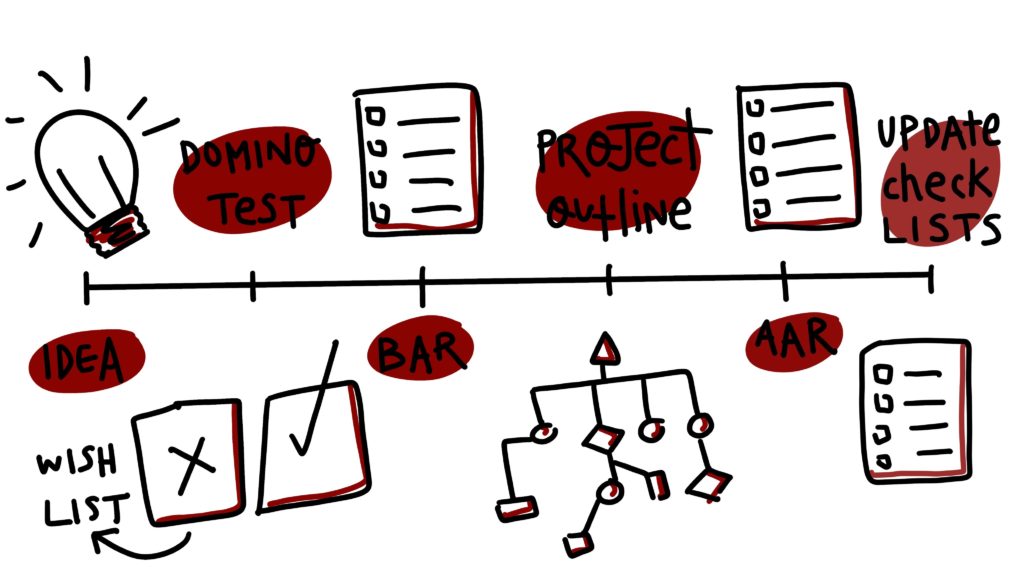
Dyan shared with us that every project she tackles, no matter big or small, Dyan takes the same approach each and every time. Dyan went on to explain to us that her magic formula follows six simple steps and assures us that it will be the fool proof answer to all our project planning and needs.
This is an image of Dyan Burgess Visual Notes

Step one: You’ve Got Your Idea

Dyan tells us that every idea that we may come across should be tested using her magic formula. At this step, you might have a wish list longer than your arm, but remember each and every idea deserves a shot. 

Step two: The Domino Test


This is an image of dominos

Dyan tells us to always start from the beginning. Dyan reminds us that just like dominos, an idea will trigger a series of other ideas to fall in line just like a domino. However, Dyan warns, that you must start at the beginning and we never start our domino test half way along, this is to ensure we have maximum impact throughout our planning process. 

Step Three: The Before Action Review 

Dyan stresses careful planning, visualisation, and review before starting any project. Here, you get started on imagining all the different things you might face on your planning journey and really look at locking down what you hope your idea will look like. Dyan tells us that by visualising ahead of time what we might come across during our planning journey, we’re better suited to face anything that comes our way. 

Step Four: Project Outline 

Here is where we map out and then action our idea. Dyan uses the example of a flow chart to help us do so. 

Step Five: The After-Action Review 
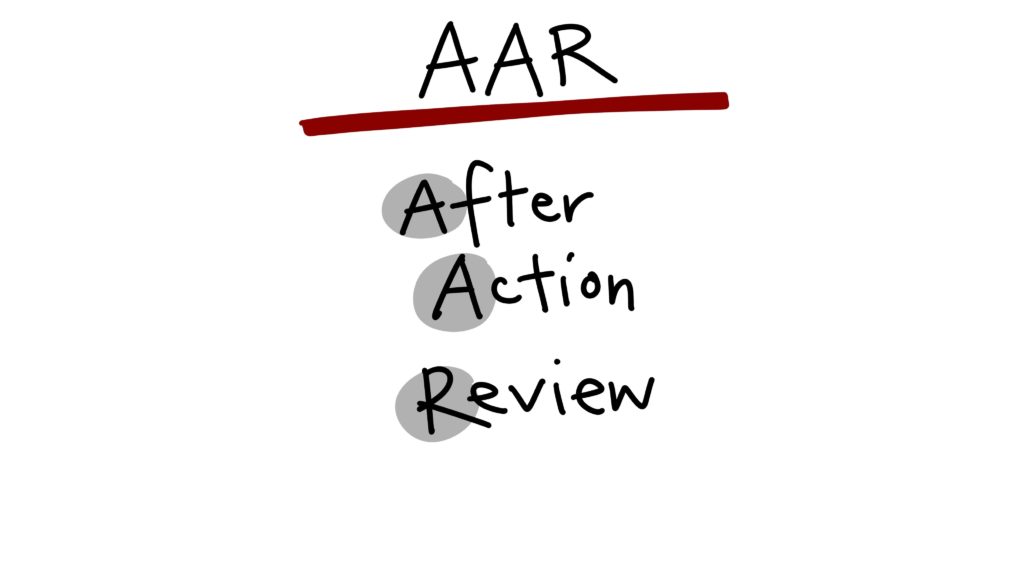
Here it’s time for a debrief. Go over absolutely everything that you’ve faced on your project journey and talk, talk, talk about all you came across along the way. 

Step Six: Update Checklists

Here is where you make a contingency plan for next time, keep all of your notes about what was faced along the way and update any resources or precedents you might have to help you along the way next time you tackle this same feat. 

Thank you to our partners for helping us bring The Retreat 2019 (a law conference like no other!) to you!

PLATINUM PARTNER

Our platinum partner Automio are thrilled to a part of the Club Retreat 2019. If you have been wanting to find out more about Automio’s combination of legal automation software and world-class training to scale your law firm to 7 figures you can book in a demo session with Business Development Manager, Mike Mullins here.

Automio love working with entrepreneurial lawyers just like you to help you scale up your law firm. And the final ‘Automio bedazzle’ we have for you is a special offer for you on Automio’s ‘Scale Up Springboard Training Program.’ 

If you enrol in Scale Up by 5pm AEDT 12 November you will get these fabulous free bonuses:

– A new, high-converting law firm website OR have our fabulous copywriter write high-converting copy for your firm’s website. 

 – A bonus small group VIP Event with Claudia King in Sydney before the 2 day Intensive. 

 – Up to $500 off your travel to the Sydney Intensive paid for

You can learn more about this offer at the Automio booth!

The Retreat 2019 Jacob Aldridge – Everything I Learnt, I Learnt from Cinema: Lessons from the World’s Greatest Cinephile!

Everything I Learnt, I Learnt from Cinema. Lessons from the World’s Greatest Cinephile.

Jacob Aldridge

Author Kiarah Grace Kelly

For the final session of the Retreat 2019 (can you BELIEVE we’re done for another year?), we were in the presence of greatness. Now- international business coach, new father, inspirational club faculty member or not, Jacob is a world record holder. Yes, in June 2003, Jacob was crowned the world record holder of the longest movie marathon ever. From Saturday to Tuesday, Jacob sat and he watched. It’s important to note, his movie marathon was more of a marathon than any athletic feat. What’s a few hours of running, anyway? Jacob’s task took days! Jacob remembered the moments in his life that matter- the birth of his daughter who was so very, very wanted, his wedding day and the memorable first kiss, and some moments of learning from his movie marathon too. Here’s what Jacob has to say, told through the movies- 

Harry Potter
  1. Harry teaches us to choose greatness, choose magnificence and to create your whole reality. 
  2. Harry Potter shows us like not many others could, that you can have life happen to you, or have life come through you. 
the Breakfast Club
  1. The Breakfast Club taught Mr Murray that we see people as we want to see people, no matter who they really are;
  2. You can be a Brain, an Athlete, a Basket Case, a Princess and a Criminal. Jacob reminded us that far too often we’re told we have to specialise, that we have to take away the parts of us that don’t fit into ‘the box’;
  3. You have permission to explore, to go where you might not usually. Chase your wildest dreams and ask all the questions. 
Star Wars: A New Hope
  1. Star Wars fans know it pays to be human, no matter what the gang come up against, humanness triumphs;
  2. If we follow the idea that we can get 80% of the outcome from 20% of the input, we can get 50% with just 1% input. In Star Wars land, we learn that it’s all about knowing your 1%, which part of the Death Star to strike;
  3. Go with the force. The Star Wars crew will always have their strategy, their goal. But, it is the force, the systems, that make it count. 
Glengarry Glen Ross
  1. Despite Alec’s greatness, this is a lesson on what not to do. Glengarry Glen Ross teaches us that the hard sales tactics still exist- 3rd prize is never ‘you’re fired’;
  2. Know your numbers, know them well. More importantly, it’s the conversation that flows after the numbers that counts. If a member of your team is underperforming, what do they need to improve?;
  3. If you ever do need to have that difficult ‘do better’ conversation, it’ll change you as a leader for the better, you’ll know what you need to do to never have to have that conversation again. 
Breakfast at Tiffany's
  1. Champagne before breakfast is a ‘sometimes’ activity;
  2. There’s not much to find at Tiffany’s for under $10;
  3. Spend your days doing things you’ve never done before- whether they take place on the streets of New York with a very handsome author as your date is another story.
the Lion King
  1. Never stand downwind of Pumba;
  2. You know this one: it’s a problem free philosophy, it means no worries for the rest of your days! No but really, Jacob reminded us that between action and reaction we always have choice, so choose not to worry.
It's a Wonderful Life

This one is up to you- you have choice. What makes a wonderful life? 

Over the course of the Retreat, we’ve had a lot of lessons, we’ve got new energy and there’s been so much excitement. Maybe we’re leaving a little fearful of the choices we have ahead. Jacob reminds us we do have the choice, if the wrong choice does arise, just like a movie, we can choose to pause, turn it off, and we won’t choose it again. 

I can’t help but to feel Jacob was the perfect choice to send us off and close out all our Retreat learnings for another year. With his usual wisdom and epic delivery, I just loved Jacob’s presentation today. 

Thank you to our partners for helping us bring The Retreat 2019 (a law conference like no other!) to you!

PLATINUM PARTNER

Our platinum partner Automio are thrilled to a part of the Club Retreat 2019. If you have been wanting to find out more about Automio’s combination of legal automation software and world-class training to scale your law firm to 7 figures you can book in a demo session with Business Development Manager, Mike Mullins here.

Automio love working with entrepreneurial lawyers just like you to help you scale up your law firm. And the final ‘Automio bedazzle’ we have for you is a special offer for you on Automio’s ‘Scale Up Springboard Training Program.’ 

If you enrol in Scale Up by 5pm AEDT 12 November you will get these fabulous free bonuses:

– A new, high-converting law firm website OR have our fabulous copywriter write high-converting copy for your firm’s website. 

 – A bonus small group VIP Event with Claudia King in Sydney before the 2 day Intensive. 

 – Up to $500 off your travel to the Sydney Intensive paid for

You can learn more about this offer at the Automio booth!

Kiarah Grace Kelly

Kiarah Grace Kelly

Blogger and Happy Lawyer

Hi! I am Kiarah Grace Kelly, I have just finished a dual Bachelors degree in Law and Government and International Relations at Griffith University on the Gold Coast. I tested my legal toes in the water at a boutique Gold Coast law firm before starting as a Law Graduate at Brisbane Family Law Centre in November 2018. I’ve just been admitted here in Queensland which makes me a Brand New Lawyer or #babylawyer as the BFLC gang likes to say. My sole practice area is Family Law.

I’m looking forward to writing about and sharing with you all that I can at this crazy-exciting but daunting stage of my career. I think there’s a need to talk about our experiences as early career lawyers so that we can all lean on each other as much as we can.

I would love to connect with you on Linkedin and Instagram!

The Retreat 2019 Katherine Maslen – Do It Now: You Have Everything Inside Of You To Make That Shift & Make It Now

Do It Now! You Have Everything Inside of You to Make that Shift & Make It Now

Katherine Maslen

Author: Hannah Trotter

Our resident naturopath, author and natural health expert, Katherine Maslen, shares on health goals, why they are so hard to achieve, and how we can start reaching them.

What's Your View on Health?

Do you value it? Is it a chore? What does good health mean to you? 

Health impacts every area of our lives but it’s more than diets and exercise – it’s about being happy and content, knowing who you are, being comfortable with yourself, and being happy with where you are at. 


Why Are Health Goals So Hard to Achieve?

Making health goals are easy, the trouble comes with seeing them through. 

Why is it so hard?

So often, we make excuses when it comes to seeing our health goals through. 

The most common excuses:

  1. Time – “I’m too busy!”
  2. Money – “I can’t afford it!”
  3. Knowledge – “I don’t know how!”
These excuses so quickly become ‘I can’t!’ So let’s take a closer look at these excuses. 
  1. Time – Does the time not exist? Or do you value other things more?
  2. Money – Do you not value it enough to pay for it? 
  3. Knowledge – Do you know how to find out? 

The reality is, it’s not that we ‘”can’t” it’s that we “won’t”. 

Katherine says it’s okay not to want to – we just have to be conscious and aware if it’s not a priority. When health isn’t a priority, but we tell ourselves it is, that’s when we start to feel failures.


What Drives Us?

We are driven by 3 key factors: 

  1. Our Values – we are living our highest values right now. If we value health, we will be driven to achieve our health goals. On the other hand, if we don’t value health, our motivation to persist and commit to our goals waivers until we give up and say we can’t.
  2. Our Beliefs – Only 5% of what’s going on in our brains is conscious. This means, if it’s not something we subconsciously want, health will quickly move down the priority list. 
  3. Our Mindset – it’s easy to go over our negative thoughts and not nearly as easy to play out the positive. If we tell ourselves we can’t be healthy, that triggers an emotion, and goes on to trigger a behaviour. Chances are if you think you can’t achieve your health goal, you won’t try very hard to prove you can. 

How To Best Set Yourself Up To Achieve Your Health Goal

Katherine helpfully gave us 5 tips to setting ourselves up with the best chance of achieving our health goals. 

  1. Be Clear – Write it down, understand it, don’t complicate it!
  2. Be Real – Be honest with yourself. Life isn’t perfect and you don’t need to be – be aware of where you’re at and work from there. 
  3. Plan it – to succeed at anything, you need a plan. Not a plan for achieving it just this week, but what you need to put in place to achieve it in the long term.
  4. Visualise it! It’s not about visualising the end result, think of the journey and imagine yourself taking the steps to get there. 
  5. Support – don’t do it alone! If things get hard, have someone you can fall back on who will encourage you to continue and do the same for them. We thrive in community. 

The Take Home

The ultimate thing I took from Katherine today is that we do and prioritise the things we value. It’s so important to be self-aware to know whether you value the goals you set enough to achieve them. That way you can accurately understand why you’re not achieving those goals – it’s not because you can’t and it’s not because you’re a failure . 

Thank you to our partners for helping us bring The Retreat 2019 (a law conference like no other!) to you!

THIS SESSION WAS SPONSORED BY

Bronwyn and Belinda, two of the #radboss ladies from Lacuna Legal Providers will be with us over the 2 days at the Retreat. Now these ladies are cleaver- they provide ‘back of house support to solo and small law firms aka YOU!!

Lacuna Legal Providers have a special offer for all attendees of the Club Retreat 2019 to sign up for a practice management or BD profile check in at 2 hours for the price of 1! At the end of the session you will get 10 tips on how you can improve your practice. More details will be shared on the flyer at the Retreat.

PLATINUM PARTNER

Our platinum partner Automio are thrilled to a part of the Club Retreat 2019. If you have been wanting to find out more about Automio’s combination of legal automation software and world-class training to scale your law firm to 7 figures you can book in a demo session with Business Development Manager, Mike Mullins here.

Automio love working with entrepreneurial lawyers just like you to help you scale up your law firm. And the final ‘Automio bedazzle’ we have for you is a special offer for you on Automio’s ‘Scale Up Springboard Training Program.’ 

If you enrol in Scale Up by 5pm AEDT 12 November you will get these fabulous free bonuses:

– A new, high-converting law firm website OR have our fabulous copywriter write high-converting copy for your firm’s website. 

 – A bonus small group VIP Event with Claudia King in Sydney before the 2 day Intensive. 

 – Up to $500 off your travel to the Sydney Intensive paid for

You can learn more about this offer at the Automio booth!
Hannah Trotter

Hannah Trotter

Blogger and Happy Law Student 

Hi there! I’m Hannah and I am a law student currently in my third year at Queensland University of Technology. I graduated high-school in 2014 completely clueless about who I was, what I wanted and how I intended to get there. To many people’s surprise (including my own) I moved from my family farm on the Sunshine Coast to Brisbane to start my law degree in 2016.

Following my first year I commenced work as the Receptionist at Brisbane Family Law Centre. Having worked with this amazing team for nearly 2 years, I have been given a learning opportunity that goes beyond lectures and tutorials by providing a practical experience of the world of Law. My experience as part of the BFLC team has taught me that a Law career does not have to fit into a traditional box which has ignited a new passion for my studies as well as my future career in the legal profession.

In the meantime, I’ll stick to writing musicals, drinking coffee and playing board games.

I would love to connect with you on Linkedin and Instagram!

The Retreat 2019 Lucy Dickens – Productise & Profit

Productise & Profit: How to simplify your business so you can do work you love.

Lucy Dickens

This an image of Lucy Dickens

Author Kiarah Grace Kelly

Lucy Dickens is the queen of all things productising. Lucy sees the world differently to many; in Lucy’s world there’s no legal product that can’t be productised. Lucy Dickens hails from Perth and graces the halls of city firm Birman & Ride by day. It is at Birman & Ride where Lucy has built and built and built. Birman & Ride now points so heavily to its inner productised businesses every day and Lucy has been such a huge part of that.

In opening her presentation, Lucy asked of us- why are we all here today? Lucy posed that there was something bigger bringing us all together, she suggested that was our collective care for meaning. Lucy goes on to explain how to get from productised services right to your meaning.

But, Why?

Productised services will allow us to simplify our businesses, we’ll go from selling time to selling solutions. 

It’s productised services that will allow us to penetrate our potential client’s scarcity mindset in a buyers market. Why? Lucy tells us that the drivers of selection when potential clients are choosing between us all are; the benefits to them, our communication with them, whether they perceive any hassle for them ahead and, in fourth place, price.

What is a Productised Service?

Productised services are packaged, sold and delivered. They are made up of deliverables and outcomes. They are always fixed price and fixed scope. Productised services position you as the expert. 

The magic of the productised service is that it is tangible, Lucy told us how it’s always easier to say yes to something you can see. When you can deliver someone something, you delight them. 

Keys to Success

So what are Lucy’s ‘must-dos’ when it comes to the productised service? Here’s the situation-

  1. Keep your ideal client at the centre of everything while you build, but also while you deliver;
  2. Sell what your client’s want, not what you want to sell;
  3. Remember that the solutions your ideal clients want, are bigger than law;
  4. To get from customer to solution, you need systems;
  5. Once you’ve got it, cross sell with it!

The Journey

Lucy took us through her productisation ladder, where do you fit? 

  • the traditional practice – you sell your expertise according to time, you tell, tell and tell again what your skills are and your client finds it difficult to know what they can do with them;
  • you sell packages – you’ve got the ingredients and you tell your client’s what you can do. But there’s no method;
  • the specialist – you know your knowledge is worth more than your time. You’ve got the packages and you’re value priced;
  • you’re productised – you take your clients from problem to promise. They get the product that they’ve been waiting for and you made it happen;
  • you have a product ecosystem – you’ve got many products, they’re automated. You’re spending the time you’ve saved by automating meaningfully. Plus, you get to choose the parts of the products process you get involved in!

Parting Words

Lucy left us by giving us a challenge- be more like a haiku (simple, elegant, full of meaning). 

If you’re looking for more, Lucy has written an e-book(!) all about this topic and you can get it at lucydickens.com.au. Lucy is happy to take questions at lucy@lucydickens.com.au.

Thank you to our partners for helping us bring The Retreat 2019 (a law conference like no other!) to you!

THIS SESSION WAS SPONSORED BY

Bronwyn and Belinda, two of the #radboss ladies from Lacuna Legal Providers will be with us over the 2 days at the Retreat. Now these ladies are cleaver- they provide ‘back of house support to solo and small law firms aka YOU!!

Lacuna Legal Providers have a special offer for all attendees of the Club Retreat 2019 to sign up for a practice management or BD profile check in at 2 hours for the price of 1! At the end of the session you will get 10 tips on how you can improve your practice. More details will be shared on the flyer at the Retreat.

PLATINUM PARTNER

Our platinum partner Automio are thrilled to a part of the Club Retreat 2019. If you have been wanting to find out more about Automio’s combination of legal automation software and world-class training to scale your law firm to 7 figures you can book in a demo session with Business Development Manager, Mike Mullins here.

Automio love working with entrepreneurial lawyers just like you to help you scale up your law firm. And the final ‘Automio bedazzle’ we have for you is a special offer for you on Automio’s ‘Scale Up Springboard Training Program.’ 

If you enrol in Scale Up by 5pm AEDT 12 November you will get these fabulous free bonuses:

– A new, high-converting law firm website OR have our fabulous copywriter write high-converting copy for your firm’s website. 

 – A bonus small group VIP Event with Claudia King in Sydney before the 2 day Intensive. 

 – Up to $500 off your travel to the Sydney Intensive paid for

You can learn more about this offer at the Automio booth!

Kiarah Grace Kelly

Kiarah Grace Kelly

Blogger and Happy Lawyer

Hi! I am Kiarah Grace Kelly, I have just finished a dual Bachelors degree in Law and Government and International Relations at Griffith University on the Gold Coast. I tested my legal toes in the water at a boutique Gold Coast law firm before starting as a Law Graduate at Brisbane Family Law Centre in November 2018. I’ve just been admitted here in Queensland which makes me a Brand New Lawyer or #babylawyer as the BFLC gang likes to say. My sole practice area is Family Law.

I’m looking forward to writing about and sharing with you all that I can at this crazy-exciting but daunting stage of my career. I think there’s a need to talk about our experiences as early career lawyers so that we can all lean on each other as much as we can.

I would love to connect with you on Linkedin and Instagram!

The Retreat 2019 Ann-Marie David – The Power of Connection: It Starts With You!

The Power of Connection

Ann Marie David

This is a image of Lawyer Ann-Maree David

Author: Hannah Trotter

In classic Ann-Marie David fashion, she instantly has the crowd on their feet demonstrating their superpowers to one another but, with a twist – no speaking allowed! 

There’s a bit of dancing, a lot of giggling and with that, the after lunch lull has certainly left the room. 

Ann-Marie’s first acknowledgement was about how every presentation, despite our speakers having been given complete free-reign as to topic, has had the common thread of being centered around humanity. 

Ann Marie is famous for her super power of connecting people with opportunity and ideas but she encourages us to realise how this can also become our super power. 

As people, we have thousands of interactions every day and with each one of these, we are given the opportunity to create connection. 

5 Senses and Their Roles in Connecting Us

As humans, connection is innate – it’s within us from the very beginning. Each of our senses are designed to bring about connection. 

  1. Sight – When we make eye contact with one another, our brains physically light up. We engage, we connect and pathways are created within our brains. 
  2. Touch – physically reaching out to touch someone. When we hug, hold, touch – our brains remember the experience and form pathways that can never be erased. The physiological impact of hugging is astonishing – it reduces stress, lowers blood pressure, and boosts serotonin levels. The electrical charge we given one another allows these pathways to embed within our brains. 
  3. Hearing – we have a radar for voice. If you register and know a voice, you can be in a crowded and noisy room and still hear it. 
  4. Smell – one of the strongest sources of memory that we have. It can connect us back to a place, a time, a feeling, a person.
  5. Taste – working in unison with smell to connect us to memory. 

Super Charging Your Power

The key to using the power of connection is building empathetic engagement.  It is this empathy that sets us apart from technology. 

Empathetic engagement creates the difference in how we make decisions and it develops trust. 

We are living in a world of disruption. Today, from the moment children are born, they are bombarded with technology. With screens held up to their eyes, they lose the opportunity to develop human connection. 

The philological impacts on the brain of a child when it is neglected, that is lacking connection, are astounding. 

We need to make the conscious effort to utilise our five senses and empathetic engagement to connect with someone at every opportunity. 


With that, Ann Marie has every attendee linking arms,  swaying, smiling, reaching out to one another, and she has certainly come through on her own power of connecting each human here today.  

Thank you to our partners for helping us bring The Retreat 2019 (a law conference like no other!) to you!

THIS SESSION WAS SPONSORED BY

Bronwyn and Belinda, two of the #radboss ladies from Lacuna Legal Providers will be with us over the 2 days at the Retreat. Now these ladies are cleaver- they provide ‘back of house support to solo and small law firms aka YOU!!

Lacuna Legal Providers have a special offer for all attendees of the Club Retreat 2019 to sign up for a practice management or BD profile check in at 2 hours for the price of 1! At the end of the session you will get 10 tips on how you can improve your practice. More details will be shared on the flyer at the Retreat.

PLATINUM PARTNER

Our platinum partner Automio are thrilled to a part of the Club Retreat 2019. If you have been wanting to find out more about Automio’s combination of legal automation software and world-class training to scale your law firm to 7 figures you can book in a demo session with Business Development Manager, Mike Mullins here.

Automio love working with entrepreneurial lawyers just like you to help you scale up your law firm. And the final ‘Automio bedazzle’ we have for you is a special offer for you on Automio’s ‘Scale Up Springboard Training Program.’ 

If you enrol in Scale Up by 5pm AEDT 12 November you will get these fabulous free bonuses:

– A new, high-converting law firm website OR have our fabulous copywriter write high-converting copy for your firm’s website. 

 – A bonus small group VIP Event with Claudia King in Sydney before the 2 day Intensive. 

 – Up to $500 off your travel to the Sydney Intensive paid for

You can learn more about this offer at the Automio booth!

Hannah Trotter

Hannah Trotter

Blogger and Happy Law Student 

Hi there! I’m Hannah and I am a law student currently in my third year at Queensland University of Technology. I graduated high-school in 2014 completely clueless about who I was, what I wanted and how I intended to get there. To many people’s surprise (including my own) I moved from my family farm on the Sunshine Coast to Brisbane to start my law degree in 2016.

Following my first year I commenced work as the Receptionist at Brisbane Family Law Centre. Having worked with this amazing team for nearly 2 years, I have been given a learning opportunity that goes beyond lectures and tutorials by providing a practical experience of the world of Law. My experience as part of the BFLC team has taught me that a Law career does not have to fit into a traditional box which has ignited a new passion for my studies as well as my future career in the legal profession.

In the meantime, I’ll stick to writing musicals, drinking coffee and playing board games.

I would love to connect with you on Linkedin and Instagram!

The Retreat 2019 Jo Alilovic – Scaling the Old Fashioned Way

Scaling the Old Fashioned Way- With People!

Jo Alilovic

This is an image of Jo Alilovic

Author Hannah Trotter

AI, Automation, Technology – it’s everywhere in business, but buying and using tech isn’t always the best way to scale your law firm. 

While tech is great and often essential, it can’t do ‘human’. It can’t empathise with a client, see how they’re feeling, or give suggestions and solutions based on that understanding. 

Every firm needs humans but there’s a lot of nervousness when it comes to employing people. 

Jo is here to bust some myths about hiring employees.

Myth 1 - Use Contractors (it's easier!)

Jo’s first myth is for those who think they’re better off using contractors than hiring employees. 

Jo encouraged us to consider whether contractors really understand our business, our values, and whether they are really invested in the vision of our businesses. 

When you have a team of employees, they are invested in helping your business succeed. 

If you’re convinced that this isn’t the case for your contractors, ask yourself:

  1. Are they really a contractor or are they actually an employee? 
  2. Whose business is their priority? Remember! Contractors need to make their own businesses their priority and yours will likely come second to that. 

Employees can bring huge advantages for your business. Finding the right person can make all the difference to how your business functions. 

Myth 2 - It's Just Too Difficult to Have Employees

We all know people have their own values, beliefs and issues – so why would we want to deal with them as employees? 

One of the most common complaints from business owners is the admin involved in hiring. 

Jo has provided the 5 things we need to do to hire employees (and they really aren’t that difficult!)

  1. Have a job description; 
  2. Have a contract of employment;
  3. Consider the insurance;
  4. Forms! (Tax forms, super forms)
  5. Payroll (add them to your system!

Beyond hiring, the most common complaints from employers is that their employees don’t know what they’re doing or behave unacceptably. To this, Jo says that this problem can be solved by having clear job descriptions, a code of conduct, open communication, and leading by example. 

Myth 3 - I Can Do It Alone!

The reality is, unless we acknowledge that we can’t do it all alone, we are going to end up feeling burned out. 

33% of lawyers are suffering from some type of distress or depression. 

Having a team to carry the load is a huge antidote to this sense of being alone and isolated. You are given the opportunity to not only share in the difficult times but share in the wins. 

When we bring on team members, we surround ourselves with different strengths. Employees bring fresh ideas and insights that we can’t achieve on our own. 

Thank you to our partners for helping us bring The Retreat 2019 (a law conference like no other!) to you!

PLATINUM PARTNER

Our platinum partner Automio are thrilled to a part of the Club Retreat 2019. If you have been wanting to find out more about Automio’s combination of legal automation software and world-class training to scale your law firm to 7 figures you can book in a demo session with Business Development Manager, Mike Mullins here.

Automio love working with entrepreneurial lawyers just like you to help you scale up your law firm. And the final ‘Automio bedazzle’ we have for you is a special offer for you on Automio’s ‘Scale Up Springboard Training Program.’ 

If you enrol in Scale Up by 5pm AEDT 12 November you will get these fabulous free bonuses:

– A new, high-converting law firm website OR have our fabulous copywriter write high-converting copy for your firm’s website. 

 – A bonus small group VIP Event with Claudia King in Sydney before the 2 day Intensive. 

 – Up to $500 off your travel to the Sydney Intensive paid for

You can learn more about this offer at the Automio booth!

Hannah Trotter

Hannah Trotter

Blogger and Happy Law Student 

Hi there! I’m Hannah and I am a law student currently in my third year at Queensland University of Technology. I graduated high-school in 2014 completely clueless about who I was, what I wanted and how I intended to get there. To many people’s surprise (including my own) I moved from my family farm on the Sunshine Coast to Brisbane to start my law degree in 2016.

Following my first year I commenced work as the Receptionist at Brisbane Family Law Centre. Having worked with this amazing team for nearly 2 years, I have been given a learning opportunity that goes beyond lectures and tutorials by providing a practical experience of the world of Law. My experience as part of the BFLC team has taught me that a Law career does not have to fit into a traditional box which has ignited a new passion for my studies as well as my future career in the legal profession.

In the meantime, I’ll stick to writing musicals, drinking coffee and playing board games.

I would love to connect with you on Linkedin and Instagram!

The Retreat 2019 Dave Eddy – The Funny Thing(s) About Lawyer Marketing

The Funny Thing(s) About Lawyer Marketing

Dave Eddy

Dave Eddy

Author Kiarah Grace Kelly

Dave Eddy is the all-humour, all-fun marketer from Newcastle that came along to the Retreat to tell us all about the good, the bad, and the ugly of lawyer marketing. Dave has experience in advertising, of course marketing, but also as a start-up founder in his venture, Camplify. Despite the hilarity that did ensue (and the ever-amusing banter between himself and Clarissa) Dave really drove home for us the importance of what we face outward.

Where to Look: Your Marketing Priorities

When visiting New York this year, Dave encountered some very slippery stairs. After carefully traversing down the stairs and thankfully making it to the bottom unscathed, he looked up to see a quite giant billboard advertising a personal injury law firm. Dave went on to show some further examples of the big and bold, more traditional marketing examples of outdoor and newspaper advertising that were also really hilarious. Tactful? No. Get’s the eyes on the prize? Yes. Dave uses these slightly problematic examples as a way to reinforce the need to be unique in marketing.

Dave then pointed us to a completely bogus report authored by a ‘David Eduardo II’ that said; “lawyers are a funny breed, some are brilliant at marketing” it went on to say; “lawyers are a funny breed, some are woeful at marketing.” But, what are the key traits of these brilliant, lawyer marketers? Take it away, Dave-

  • brilliant lawyer marketers are trustworthy;
  • they are articulate and direct communicators;
  •  they are knowledgeable;
  • they are persuasive and compelling;
  • they avoid jargon. 

Dave left us by reminding us that we already have the skills it takes to be a great marketer due to our legal lives, we just have to use them. Also, did you know the team pages of service based business websites are the 2nd most visited pages they have, and about 40% of all traffic will flow there? Now get updating those pages! And finally, it’s all about content that cuts-through and giving one thing a go at a time. 

Thanks Dave!

Thank you to our partners for helping us bring The Retreat 2019 (a law conference like no other!) to you!

PLATINUM PARTNER

Our platinum partner Automio are thrilled to a part of the Club Retreat 2019. If you have been wanting to find out more about Automio’s combination of legal automation software and world-class training to scale your law firm to 7 figures you can book in a demo session with Business Development Manager, Mike Mullins here.

Automio love working with entrepreneurial lawyers just like you to help you scale up your law firm. And the final ‘Automio bedazzle’ we have for you is a special offer for you on Automio’s ‘Scale Up Springboard Training Program.’ 

If you enrol in Scale Up by 5pm AEDT 12 November you will get these fabulous free bonuses:

– A new, high-converting law firm website OR have our fabulous copywriter write high-converting copy for your firm’s website. 

 – A bonus small group VIP Event with Claudia King in Sydney before the 2 day Intensive. 

 – Up to $500 off your travel to the Sydney Intensive paid for

You can learn more about this offer at the Automio booth!

Kiarah Grace Kelly

Kiarah Grace Kelly

Blogger and Happy Lawyer

Hi! I am Kiarah Grace Kelly, I have just finished a dual Bachelors degree in Law and Government and International Relations at Griffith University on the Gold Coast. I tested my legal toes in the water at a boutique Gold Coast law firm before starting as a Law Graduate at Brisbane Family Law Centre in November 2018. I’ve just been admitted here in Queensland which makes me a Brand New Lawyer or #babylawyer as the BFLC gang likes to say. My sole practice area is Family Law.

I’m looking forward to writing about and sharing with you all that I can at this crazy-exciting but daunting stage of my career. I think there’s a need to talk about our experiences as early career lawyers so that we can all lean on each other as much as we can.

I would love to connect with you on Linkedin and Instagram!

The Retreat 2019 Sam Buckby— Creating inspired work spaces with people, performance and purpose in mind.

Creating inspired work spaces with people, performance and purpose in mind.

Sam Buckby

This is an image of Sam Buckby

Author Hannah Trotter

Sam Buckby is a tradie who has been in the construction industry over 20 years. In the last few years, he developed a design and consultancy firm. Passionate about space, Sam is adamant that we can make our work spaces better. 

Sam’s podcast ‘Spaces’ interviews humans who have successfully designed beautiful spaces and below he shares a few snippets he has learned from his guests. 

Design Areas For Performance, Not To Produce.

“Time invested does not equal output achieved. Forget productivity, think performance. Time away from the desk is not a bad thing”. 

We want work spaces that inspire creativity and high performance. 

Thinking outside the box is more than just a metaphor. It’s not about speaking outside the box, we need to get ourselves out of the box. Square rooms, white walls encourage institutionalised thinking. 

Sam went on to say that if you think your office is about impressing your clients, you’ve missed the point. The most important asset in our businesses’ are our people – our staff. We need to set up our environments base don our people and what we stand for. This way, we can inspire our staff and that will bring the clients in. 

Creating Healthier Homes & Work Spaces

“One third of illness comes from our environment. In many cases, we have control of this. If we don’t have our health, what do we have?”

We need to be aware of the environments we are creating. Consider air flow, natural light, our spaces should encourage health and our staff should feel well being there. 

“Work spaces that harm your health are unacceptable. Something as simple as bad lighting can damage your sleep patterns at night” and decrease your ability to work well the next day. 

Wellness Standards and Creating Environments to Thrive

“Social connection is proved to help with creativity, innovation and collaboration.”

Sam’s guest Heidi encouraged us to have collaborative spaces central to our office and to push the quiet spaces out. 

Create break out spaces that your staff enjoy and want to be in then create a culture around it. 

Scent, Sound, Colour and Light in the Work Place

When setting up her Family Law firm, Clarissa Rayward deliberately set up in a house to make people feel warm and welcome. This has the wonderful by product of people walking in and knowing whether her firm was for them or not. 

Clarissa modeled a space to create energy through scent and sound. “Busy energy creates meaningless chaos, whereas calm energy is high performance”.

Small changes make huge differences. The space we create determines the how well we provide our service and attitude in providing it. 


Smart Design Living Buildings and Taking Influence From Nature

“Describe a flower, it’s grounded, it’s 100% naturally fueled, it has no waste or toxicity, it’s beautiful. A building can be all of these things.”

Guest Stephen Choi encourages us to be inspired by nature and the world around us. We can do this through foliage, architecture, and colours. 

It’s not something we can necessarily achieve over night but as Stephen says “everything in the world that is good takes time. Doesn’t ever expect perfection on inception”. 

Thank you to our partners for helping us bring The Retreat 2019 (a law conference like no other!) to you!

PLATINUM PARTNER

Our platinum partner Automio are thrilled to a part of the Club Retreat 2019. If you have been wanting to find out more about Automio’s combination of legal automation software and world-class training to scale your law firm to 7 figures you can book in a demo session with Business Development Manager, Mike Mullins here.

Automio love working with entrepreneurial lawyers just like you to help you scale up your law firm. And the final ‘Automio bedazzle’ we have for you is a special offer for you on Automio’s ‘Scale Up Springboard Training Program.’ 

If you enrol in Scale Up by 5pm AEDT 12 November you will get these fabulous free bonuses:

– A new, high-converting law firm website OR have our fabulous copywriter write high-converting copy for your firm’s website. 

 – A bonus small group VIP Event with Claudia King in Sydney before the 2 day Intensive. 

 – Up to $500 off your travel to the Sydney Intensive paid for

You can learn more about this offer at the Automio booth!

Hannah Trotter

Hannah Trotter

Blogger and Happy Law Student 

Hi there! I’m Hannah and I am a law student currently in my third year at Queensland University of Technology. I graduated high-school in 2014 completely clueless about who I was, what I wanted and how I intended to get there. To many people’s surprise (including my own) I moved from my family farm on the Sunshine Coast to Brisbane to start my law degree in 2016.

Following my first year I commenced work as the Receptionist at Brisbane Family Law Centre. Having worked with this amazing team for nearly 4 years, I have been given a learning opportunity that goes beyond lectures and tutorials by providing a practical experience of the world of Law. My experience as part of the BFLC team has taught me that a Law career does not have to fit into a traditional box which has ignited a new passion for my studies as well as my future career in the legal profession.

In the meantime, I’ll stick to writing musicals, drinking coffee and playing board games.

I would love to connect with you on Linkedin and Instagram!