
10 ways Collaborative Practice training
will make you better at what you already do
Here is a slightly odd sales pitch for my Collaborative Practice training.
You don’t actually need to practise Collaboratively to get your money’s worth.
Now, obviously, I hope you do. I have spent a large part of my career trying to get more professionals working in this way, so it would be a fairly terrible business model if I started talking you all out of it. 😂
But one of the things I love most about teaching Collaborative Practice is watching people realise that the skills they are learning are not just “Collaborative skills”.
They are human skills.
At its heart, Collaborative Practice teaches us to slow down and get curious about the human sitting in front of us. We learn to listen for more than just the answer to our question and to dig a little deeper into what someone really wants, rather than simply accepting what they tell us they want.
That curiosity changes the conversation. We start to understand what might be driving a person’s position and we get better at asking the question that helps both of us see the problem differently. And when things get difficult, as they inevitably do when humans and conflict collide, we have more tools to help people move through the mess and make good decisions, even when they are stressed, scared, angry or sometimes all three before morning tea.
Those skills are useful everywhere.
So whether you are a lawyer, mediator, financial professional, coach or another professional working with separating families, here are 10 things you might accidentally get better at if you learn Collaborative Practice.
1. Become a better litigator. Yes, really.
This one sometimes surprises people.
Collaborative Practice and litigation tend to get talked about as though they live at opposite ends of the family law universe. Learn Collaborative Practice and apparently you must immediately throw away your court shoes and refuse to utter the words “interim hearing” ever again.
Except that isn’t how it works.
Good litigation requires us to be really clear about two things: what our client wants and what the law can actually deliver. And, as every family lawyer knows, those two things do not always line up neatly.
This is where Collaborative skills can be incredibly useful. They teach us to slow down and get underneath what our client is telling us they want. Why does that particular outcome matter so much? What are they worried about? What are they trying to protect? Sometimes the answer gives us a completely different way of looking at the problem. And sometimes it helps us have the much harder conversation about the gap between the outcome our client desperately wants and the outcome the law can realistically give them.
But it doesn’t stop with our own client.
We can bring that same curiosity to the person on the other side of the problem. Instead of only responding to the position they have taken, we can start wondering what is driving it. We might not agree with them, and we certainly don’t need to, but if we can understand what matters to them, we have more information to work with.
And that matters enormously in litigation. Because even when a case is in court, most of the work is still about trying to solve problems and find the things that can be agreed. Understand the drivers and sometimes you can settle one issue, then another, and perhaps even the whole case.
Collaborative Practice doesn’t make you less of a litigator. It simply adds a few more tools to the toolbox.
And I will take all the tools I can get.
2. Get better at settling cases
Understanding what is driving the people involved is one thing. Knowing what to do with that information is where things get really interesting.
One of the habits we learn in Collaborative Practice is to resist racing straight from “here is the problem” to “here is my solution”. Which is harder than it sounds, particularly for lawyers. We are trained to solve problems and most of us quite enjoy being the person with the answer!
Instead, we spend more time getting clear on what actually needs to be solved before we start throwing solutions around and that changes negotiations.
If we are only negotiating from positions, there isn’t always much room to move. One person wants A. The other wants B. We can argue about A and B for a very long time, and family law has certainly demonstrated an impressive capacity to do exactly that.
But once we understand why A matters and why B matters, we have more to work with. We can start generating options that neither person may have thought of at the beginning, test those options against what actually matters to them and sometimes find a solution hiding somewhere other than A or B.
That doesn’t mean everyone gets what they want. It doesn’t mean splitting everything down the middle or agreeing for the sake of keeping the peace. And it certainly doesn’t mean avoiding the difficult legal realities that sometimes need to be said out loud.
It just means we get better at solving the right problem.
And when your day job involves helping humans who disagree with each other find a way forward, that is a pretty useful skill to have
3. Ask better questions, rather than just more of them
Lawyers, in particular, are very good at questions. We have MANY questions. We can ask questions for hours and, if necessary, provide you with a questionnaire containing questions about the questions we are planning to ask you later.
But Collaborative Practice teaches us a slightly different skill. It teaches us to stay curious for longer.
That sounds simple, but I don’t think it always is. As professionals, we are used to being the person who knows what to do next. Someone tells us their problem and, while they are still talking, our brain is already busily sorting the information, spotting the issues and racing ahead to the advice or the solution.
Collaborative Practice asks us to resist that urge for just a little longer. Instead of assuming we understand what someone means, we get curious about it. We ask them to tell us more. We wonder why something matters so much to them, or what they are most worried might happen. And often it is that next question, the one we might not have asked because we thought we already knew the answer, that tells us what is really going on.
That changes the quality of the conversation. Because better questions give us better information, but they also help the person sitting in front of us think differently about their own problem. Sometimes they don’t know why something matters so much until we give them the space to work it out.
And this one definitely isn’t just for lawyers. If your work involves humans and their problems, getting better at being curious before jumping in with the answer is a pretty handy skill.
Even for those of us who really, really like having the answer.
4. Build some very human superpowers in an AI world
I think about this one a lot at the moment.
AI can already do an extraordinary amount of the technical “doing” in professional work, and it is only going to get better at it. Work that once took us hours can now happen in minutes, sometimes seconds, and I don’t think we are anywhere close to seeing the end of that change.
Which leaves us with a pretty interesting question. If technology can increasingly do the doing, where does our real value sit?
I think more and more of it sits in being really good at humans.
It is in sitting across from someone and listening properly, not just waiting for the bit of information you need to give your advice. It is noticing when what someone is saying and what they actually mean might be two different things. It is being curious enough to ask one more question, reading the room when a conversation starts to shift, and understanding why two perfectly sensible humans can look at exactly the same problem and see two completely different things.
And in family law in particular, it is being able to help someone work out what actually matters to them when their brain is full of fear, anger, uncertainty and 47 different pieces of advice from friends, family and possibly someone they met at school pick-up.
For years we have called these the “soft skills”, as though they were the nice extra bits sitting around the edges of the real professional work.
I think that has it completely backwards.
As AI gets better at the technical work, our ability to listen, connect, communicate, be curious and help humans make difficult decisions is going to become more valuable, not less.
These are our very human superpowers.
And they just happen to sit right at the heart of Collaborative Practice.
5. Become a better negotiator without becoming a bigger pain in the bum
Somewhere along the way, we seem to have confused being a good negotiator with being the person who pushes hardest.
And sometimes we do need to push. Sometimes we need to be firm, give difficult advice or hold a line. Collaborative Practice doesn’t ask us to hand over our backbone at the door. But sometimes pushing harder just means everyone pushes back harder and we all spend another six weeks writing increasingly grumpy emails to each other.
Collaborative Practice gives us another set of tools. Instead of focusing only on what each person says they want, we get curious about why they want it. Once we understand what actually matters, where the worries sit and what each person is trying to protect, we suddenly have far more information to negotiate with. And that can open up options that weren’t obvious when everyone was busy defending their original position.
It doesn’t mean becoming a pushover. For me, that is the real skill in negotiation. It isn’t about being “nice”, avoiding disagreement or finding the halfway point between two competing demands. It is about knowing when to push, when to pause, when to ask another question and when there might be a completely different way through the problem.
You can still be strategic and strong. (You just don’t necessarily have to be a pain in the bum while you are doing it. 😂)
6. Understand what happens when humans get stressed and slightly weird
Family law is, among many other things, an industry built around humans having some of the hardest conversations of their lives. And humans under stress can get a little weird.
When everything feels uncertain, we don’t always behave like the calm, rational humans we might ordinarily be. We can get stuck on one thing and find it almost impossible to move past it. Something that seems completely insignificant to everyone else can suddenly become VERY important. And sometimes we send an email at 11.47pm that could have waited until morning… or maybe should never have been sent at all.
One of the things Collaborative Practice teaches us is to become more curious about what might be happening underneath the behaviour we can see. Someone who appears to be stubbornly refusing to move might actually be frightened about what happens next. Someone who is completely fixated on one small issue might be desperately trying to regain a little control when everything else in their life feels uncertain.
That doesn’t mean we excuse poor behaviour or decide that every unreasonable position is suddenly reasonable but understanding what might be driving the behaviour gives us more choices about how we respond to it.
Instead of simply deciding that someone is “difficult”, we can ask ourselves ‘what might be making this difficult for them’. That is a very different question, and sometimes it leads us to a very different response.
It turns out that understanding why humans get slightly weird under stress is quite useful when your work involves humans under stress. Who knew? 😂
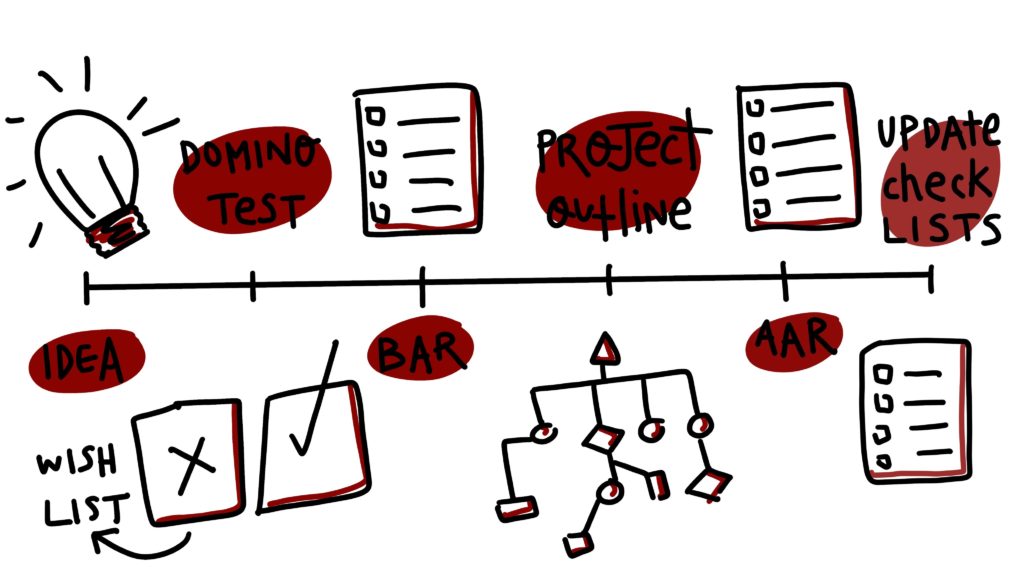
7. Learn to treat a family law settlement like a project
This is one of the things I think Collaborative Practice teaches particularly well, although we don’t always describe it this way.
A family law settlement is really a project.
There is a beginning, an outcome we are working towards and usually a whole lot of things that need to happen in between. We need information, advice and sometimes input from different professionals. Decisions need to be made in a sensible order and everyone needs to understand what is happening next.
And yet family law can become incredibly reactive. We can spend so much time dealing with whatever has landed in front of us that day that we lose sight of the bigger plan. The matter keeps moving, everyone is very busy, lots of emails are being sent, and then mediation suddenly appears in the calendar and we discover there were 14 things we really should have sorted out before we got there.
Collaborative Practice teaches us to step out of that reactive rhythm and deliberately design the process. We get clear about what needs to be resolved, work out what information and expertise will help us get there, decide who is doing what and keep everyone moving through the work in a logical order.
That doesn’t mean everything goes neatly to plan. Humans are involved, so obviously that would be asking a bit much. 😂 But it does mean someone is managing the process rather than simply responding to whatever happens next.
And I think that is a hugely transferable skill.
Whether you are working Collaboratively, negotiating a settlement, preparing for mediation or managing a matter that is already in court, treating the resolution process as a project can make the whole thing more purposeful, more efficient and a lot less chaotic.
8. If you aren't a lawyer, get a peek inside our strange little lawyer brains
I think this is a really important part of Collaborative training that can sometimes get lost.
This training is not just for lawyers.
Collaborative Practice works because different professionals bring different expertise to the table. That might include financial professionals, coaches, psychologists, mediators and others who work with separating families.
And for those professionals, the training provides a slightly fascinating peek behind the lawyer curtain.
You get to understand why we think the way we do, why the legal system works the way it does, why lawyers sometimes become focused on things that seem completely bizarre to everyone else in the room, and the professional obligations and constraints that sit behind some of our decisions.
We lawyers also get the equally useful experience of discovering that ours is not, in fact, the only brain worth having in the room. 😂
When we understand each other’s professional worlds better, we become much better at working together.
Which brings me to…
9. Get better at actually working with other professionals
Multidisciplinary practice sounds lovely.
Until everyone goes back to their separate offices, does their own bit, writes their own report and sends it to everyone else.
Collaborative Practice asks more of us than that. It teaches us how to genuinely work as a team around a family, rather than simply being a collection of professionals who happen to be working with the same people.
And that can require a bit of a mindset shift. Genuinely working together means being curious about what the other professionals can see that we can’t. Their expertise might change the way we understand the problem, or even show us that the thing we thought needed solving isn’t actually the thing we should be solving first.
For lawyers, this can be particularly useful because we are quite accustomed to being in charge.
Apparently there are occasions when we do not need to be.
I know. I was surprised too. 😂
Getting interdisciplinary work right means recognising that our expertise is one part of the picture, not the whole picture. Sometimes the most useful thing we can do is lead the conversation, and sometimes it is to make room for someone else to do it.
And when we get that right, the client gets something far better than a collection of professionals doing separate jobs.
They get a team.
10. Become mildly annoying at home
I feel it is only fair that I disclose this before you enrol.
There is no off switch.
Once you have spent time learning about positions and interests, asking better questions and getting curious about what is actually driving a disagreement, you may accidentally start doing it everywhere.
Including at home.
Someone says, “I am NOT going.” And instead of immediately launching into your perfectly prepared argument about why they absolutely ARE going, a tiny Collaborative Practitioner appears on your shoulder and whispers, “I wonder what is sitting underneath that position?”
This can be very annoying.
Before long, you may find yourself wondering about the interests sitting underneath the Great Dishwasher Dispute or attempting some interest-based negotiation over where the family is going for dinner. You may even catch yourself getting curious when your child announces that they absolutely cannot put their shoes on, when what you actually want to say is, “PUT YOUR SHOES ON.”
A small disclaimer here. These skills do not work on toddlers. Sorry. Toddlers have no interest in your carefully developed Collaborative skills and will not be drawn into a thoughtful exploration of the interests sitting underneath their refusal to wear pants.
But with most other humans, annoyingly, sometimes it works.
I apologise in advance.
So, do you actually need to practise Collaboratively?
I hope you do.
I genuinely believe Collaborative Practice offers families a better way to work through separation, and I would love to see many more professionals across Australia with the skills and confidence to practise this way.
But you don’t have to wait until your first Collaborative matter lands on your desk before this training becomes useful.
You might use something you learn in your very next client meeting, or find yourself approaching a mediation or negotiation differently. You might ask a better question in a difficult conversation with another professional, manage a matter with a little more purpose, or notice yourself pausing before firing off that email you really, really want to send.
And yes, apparently you might use it in an argument about the dishwasher. Although, as previously disclosed, I make no promises whatsoever when toddlers are involved.
That is why, after all these years of practising and teaching Collaborative Practice, I still love this training.
Yes, we are teaching a process. But underneath that process, we are teaching professionals how to work differently with other humans. How to stay curious when it would be easier to jump to an answer, how to understand what might be sitting underneath a disagreement, and how to help people solve difficult problems when they are not necessarily at their calmest or most rational.
And the longer I do this work, the more convinced I am that those skills matter, particularly now.
In a world where technology can do more and more of the technical work for us, I think our ability to be really good at the human part of our work is only going to become more valuable.
So yes, I would love you to become a Collaborative Practitioner but I would also just love you to learn Collaborative Practice. Because whether you use it in a Collaborative matter, a mediation, a court case, a client meeting or the ‘Great Dishwasher Dispute’, I think it will change something about the way you work with people.
And that, really, is the point.
Our next Online Introduction to Collaborative Practice Training starts on 9 October 2026. It is designed for lawyers and non-lawyer professionals who work with separating families, and I would love to have you join us.
About the Author
Clarissa Rayward is an Accredited Specialist in Family Law and Director of Brisbane Family Law Centre. She is also the founder of Happy Lawyer Happy Life, where she works with lawyers across Australia to design practices that are sustainable, humane and commercially sound. Clarissa regularly presents on collaborative practice, lawyer wellbeing and innovative legal systems design.
Around the Owners' Table
A monthly conversation for law firm owners.
No presentations. No pressure to network. Just good Chit Chat.
Connection. Community. Accountability.
Join our signature online membership for law firm leaders who thinking deeply, connect honestly and practise law with the intention to live a life that actually fits.